
Peruvian Textile Patterns & Their Cultural Meaning
This post may contain affiliate links. If you click one and make a purchase, I may earn a small commission at no extra cost to you. I only recommend products I genuinely use or believe will add value to you.
Most visitors to Peru see beautiful patterns. Few realize they’re looking at a language.
Before the Spanish arrived in Peru, Peruvian cultures recorded belief, status, identity, and memory in textiles — not written words.
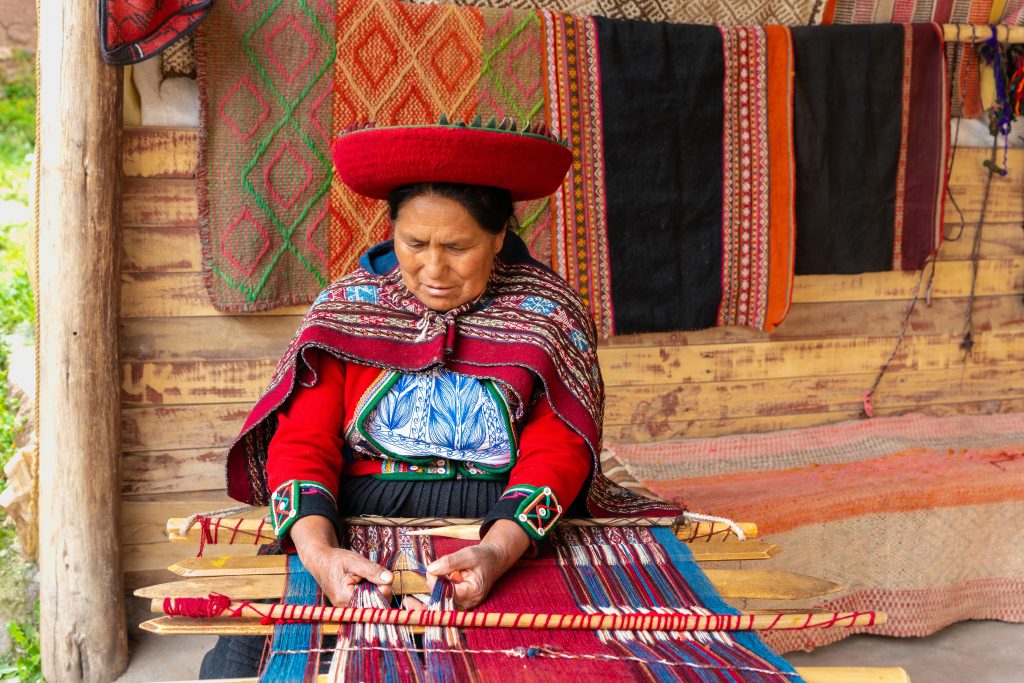
So, when you’re looking at a poncho or a lliclla covered in geometric shapes, you’re not just looking at decoration—you’re basically looking at a document. Many of the symbols and colors you’ll see in Peruvian textiles carry meanings passed down through generations of Indigenous weavers.
When most people hear Peru, they think of the Inca. But the Inca were only one civilization in a country shaped by thousands of years of Indigenous history. Peru is home to dozens of distinct cultures, from Quechua and Aymara communities across the Andes to Indigenous nations throughout the Amazon, each with its own traditions, stories, and visual language.
This article introduces two of the textile traditions travelers are most likely to encounter: Andean weaving in Cusco and the Sacred Valley, and Amazonian kené, still practiced today by Shipibo-Konibo artisans—including in Lima.
In a separate post, textile expert Abby Franquemont walked me through how to tell a genuinely handwoven piece from a machine-made one. This is the other half of the story: how to understand what you’re actually looking at.
What Do Peruvian Textile Patterns Mean?
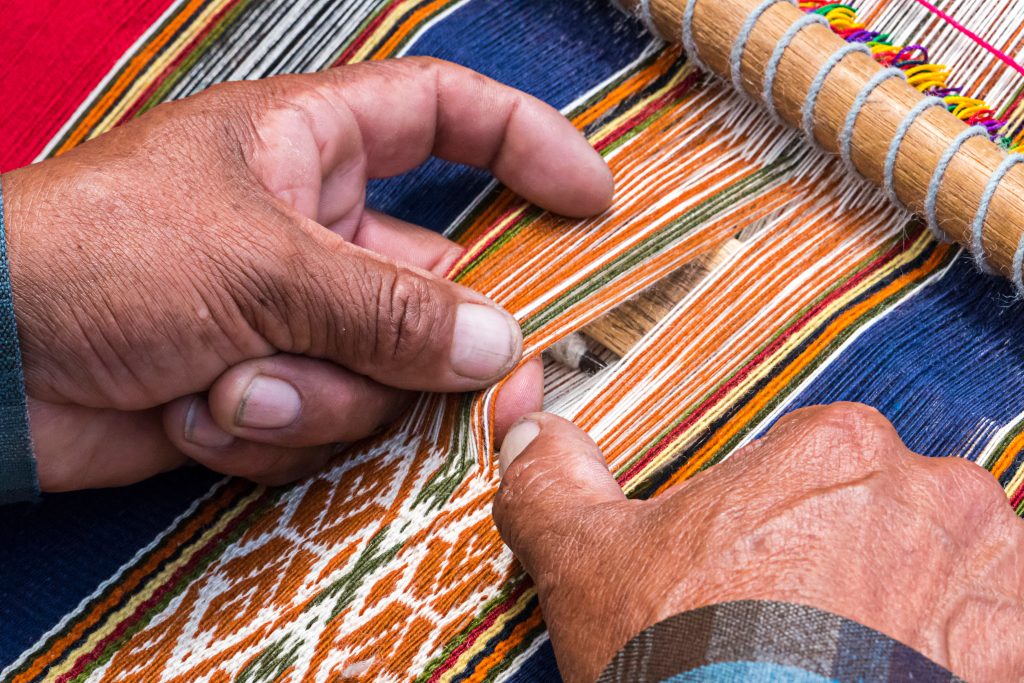
The easiest way to think about Peruvian textiles is this: they’re stories woven into cloth. Some celebrate family. Others honor mountains, animals, farming, or the community itself. Once you know what you’re looking for, you’ll start spotting those stories everywhere.
In the Cusco region, woven designs are often known as pallay. The word means “design,” but the patterns function almost like a visual language. Once you recognize a few of the most common symbols, you’ll start spotting them everywhere—from market stalls in Pisac, Ollantaytambo and Cusco to museum collections in Lima and weaving cooperatives throughout the Sacred Valley.
It’s also important to remember that there is no single universal dictionary of Peruvian textile symbols. Meanings can change from one community to another, and the same image may be woven differently depending on the village, the artist, or the purpose of the textile.
Still, there are several symbols you’ll see again and again.
Common Peruvian Textile Symbols and Their Meanings
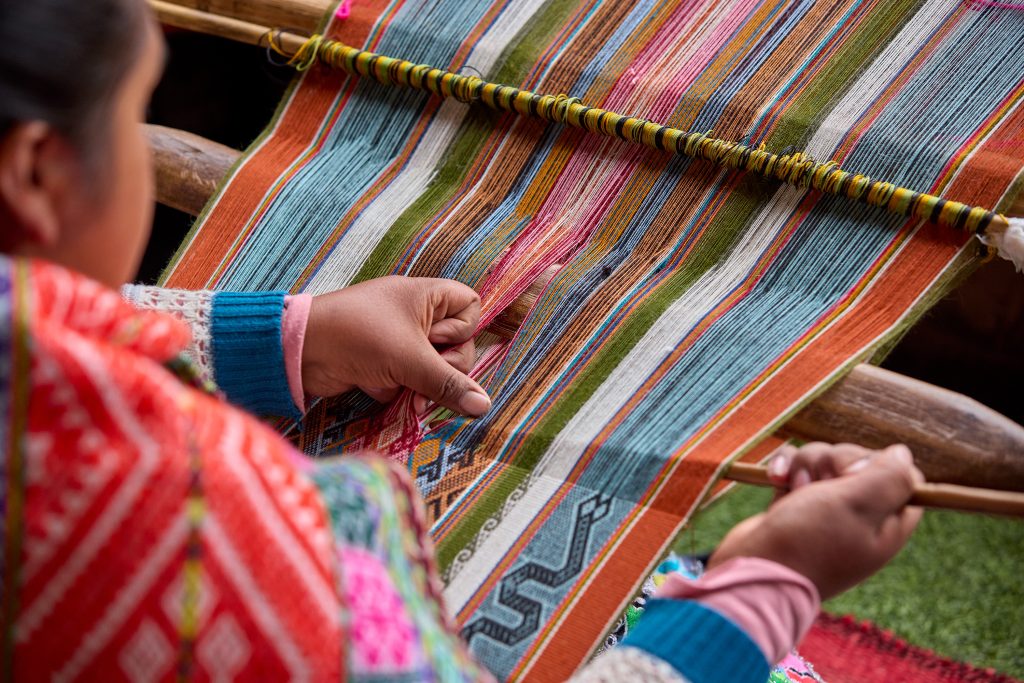
The Chakana (Andean Cross)
The chakana, or Andean Cross, is one of Peru’s most recognizable symbols. Its stepped design represents the three levels of Andean cosmology:
- Hanan Pacha: the upper world
- Kay Pacha: the world of the living
- Ukhu Pacha: the inner world or underworld
More importantly, it reflects the Andean belief that these three worlds are connected rather than separate. It’s also one of the first patterns many weavers learn, so you’ll find versions of it on belts, bags, ponchos, blankets, and wall hangings throughout Peru.
Condor
The condor represents Hanan Pacha, the upper world. Because it soars high above the Andes, it’s traditionally seen as a messenger between the earthly world and the heavens, symbolizing freedom, spirituality, and a connection to the divine.
Puma
The puma represents Kay Pacha, the world of the living, and symbolizes strength and power. According to tradition, the ancient city of Cusco was designed in the shape of a puma, with the fortress of Sacsayhuamán forming its head.
Serpent
The serpent is associated with Ukhu Pacha, the inner world or underworld. Because snakes shed their skin, they often symbolize wisdom, transformation, renewal, and rebirth.
Q’ente (Hummingbird)
The q’ente, or hummingbird, often appears as a pair feeding one another. It symbolizes reciprocity, nurturing, and care—values that lie at the heart of Andean life. You’ll sometimes see hummingbirds woven into wedding textiles or pieces celebrating mothers and children.
Llamas
Llamas appear everywhere in Andean textiles—and for good reason. For centuries, llamas and alpacas provided wool, transportation, food, and economic security for mountain communities. A herd woven into a textile isn’t simply decorative; it often reflects the livelihood that sustained an entire family.
What Do the Colors in Peruvian Textiles Mean?
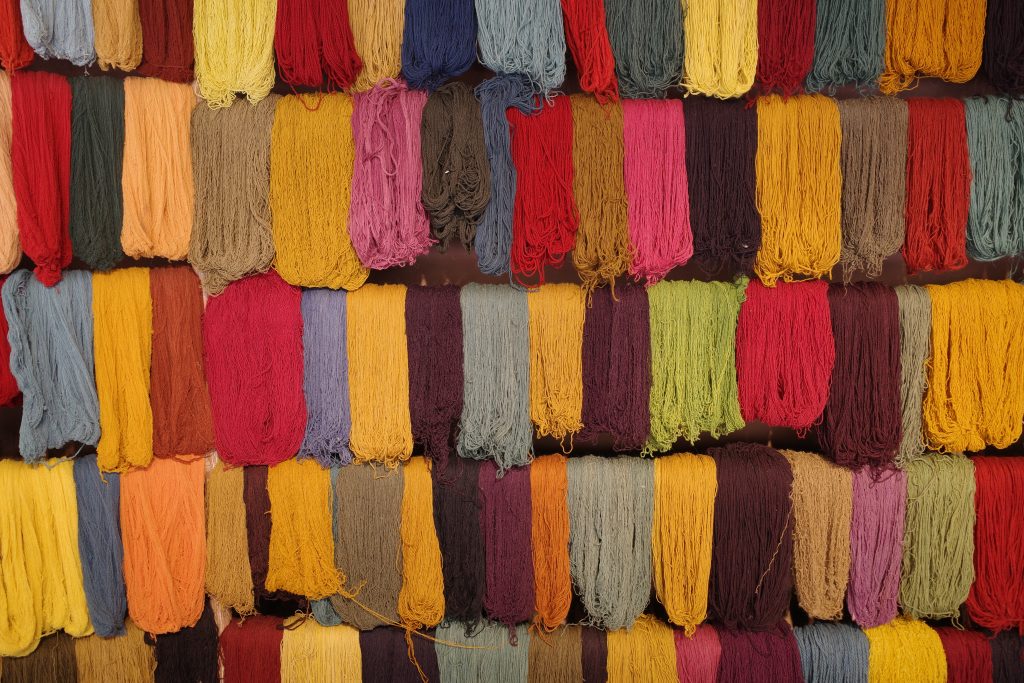
Color is one of the first things people notice about Peruvian textiles, but it can also be one of the most confusing parts.
Traditional Andean weavers created dyes from insects, plants, bark, flowers, minerals, and other natural materials.
Rich reds and pinks often came from cochineal, a tiny insect that lives on prickly pear cactus. By changing the ingredients mixed with the dye, weavers could produce an extraordinary range of shades, from deep crimson to bright fuchsia.
Blues traditionally came from indigo, while yellows, browns, greens, and oranges could be created from local plants, roots, leaves, and minerals.
Colors may carry symbolic meaning, but those meanings shift from community to community. Red can mean blood, life, or the earth. Green can mean agriculture or the natural world. Yellow can mean corn, sunlight, or abundance.
Color also tells you something about how a textile was made.
Many textiles sold in markets today use synthetic yarns and chemical dyes, which tend to run bright — sometimes almost neon. There’s nothing wrong with buying one if you love it; they’re usually less expensive and can still be handmade.
But the brightest textile isn’t necessarily the most authentic one. Natural dyes age gradually, mellowing into the slightly faded, layered tones collectors love. Also know, however, a faded textile isn’t automatically old or traditional — but a softly aged one might be more traditional than a perfectly uniform, electric-bright one.
Sometimes the quieter textile is the one with the better story.
These Traditions Are Much Older Than the Inca
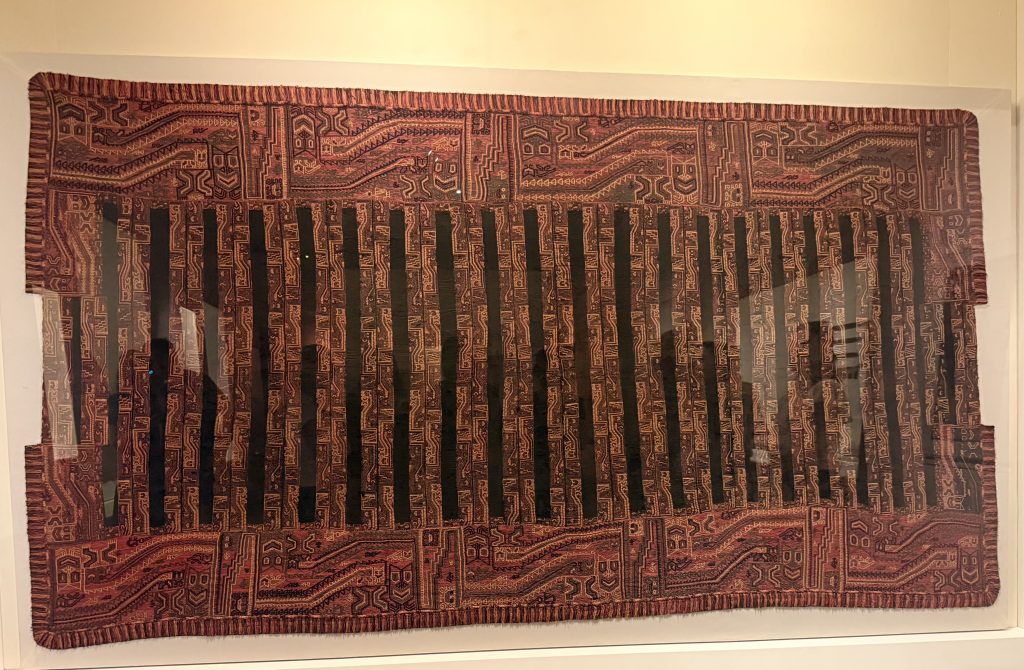
Long before the Inca Empire existed, civilizations including the Paracas, Nazca, Moche, Wari, and Chimú were producing extraordinarily complex textiles.
The Inca inherited and expanded many of those techniques, eventually organizing textile production according to quality, purpose, and social rank. Fine cloth could be used as tribute, gifted to political allies, offered in religious ceremonies, or worn to communicate status.
One of the very best places to see all of this come to life is Museo Larco in Lima.
The museum even holds a Paracas funerary mantle that is more than 2,000 years old. The dead were wrapped in elaborately embroidered cloth before burial, often surrounded by layers of textiles made with astonishing precision.
One repeating figure on the mantle combines a feline’s body, a bird’s feet, and a serpent’s tail—the same three-world idea you now recognize in the puma, condor, serpent, and chakana, stitched into a single creature.
The person being buried was literally wrapped in an entire worldview.
I strongly recommend visiting Museo Larco with a guide rather than going completely self-guided. Much of the symbolism is not fully explained on the wall labels, so without someone pointing it out, you may walk past some of the most fascinating details.
We used Exquisito Peru and had an amazing experience, but there are also guided options through Viator and GetYourGuide.
Try to schedule your visit around lunch or dinner and book a meal at the museum’s beautiful restaurant. I like the garden section best.
Why the Same Symbol Looks Different From Village to Village
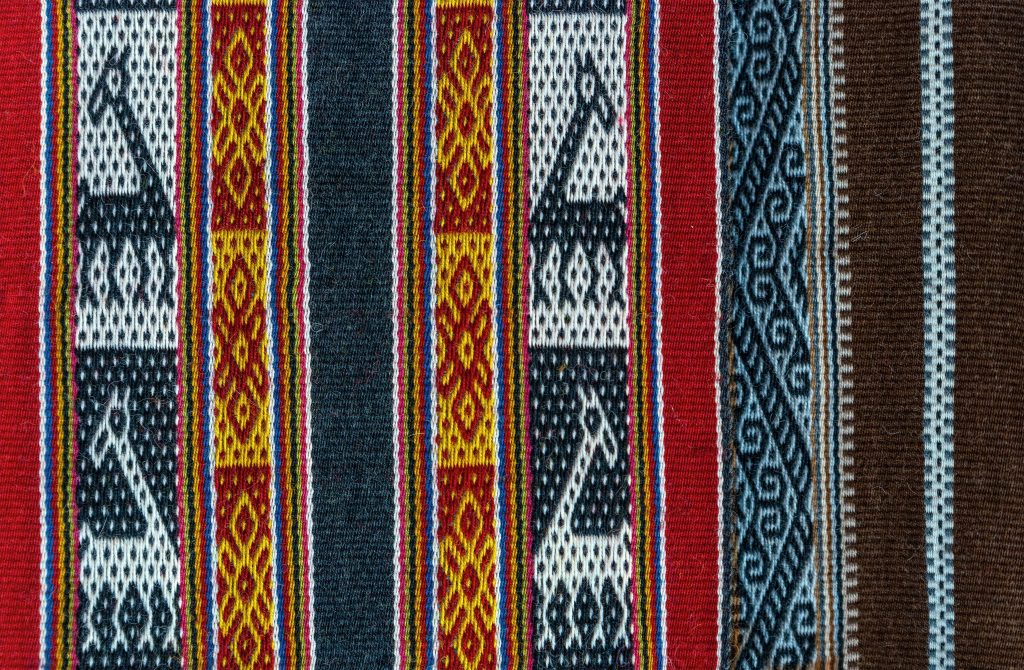
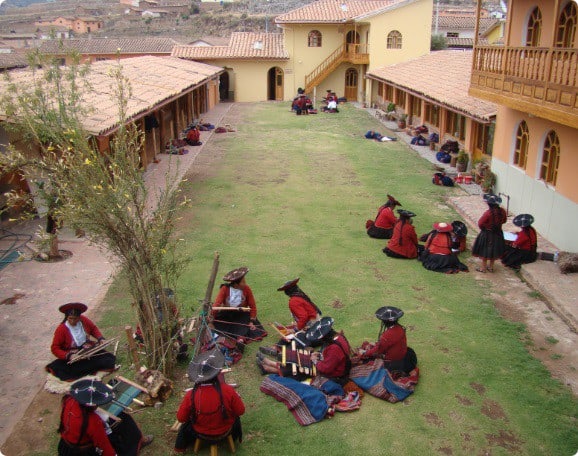
If you spend time in the Sacred Valley, you’ll notice that the same core symbols look different depending on where you are. A llama woven in one community won’t look like one woven in another — the same goes for hummingbirds, flowers, mountains, rivers, and geometric designs. Each community has preserved its own visual dialect within a broader Andean vocabulary, and the differences aren’t just artistic choices. They communicate identity.
The nonprofit Abby’s family helped found, the Center for Traditional Textiles of Cusco, works with ten partner weaving communities, each with its own techniques, patterns, colors, and traditions.
A generation ago, much of this knowledge nearly disappeared, as cheap synthetic yarn spread and discrimination against Indigenous dress pushed some families away from traditional weaving. That’s part of why buying an authentic handwoven textile matters — you’re not just buying something beautiful, you’re helping a specific community’s artistic language survive.
Beyond the Andes: Kené in Lima
Everything above comes primarily from Andean traditions, but Peru’s textile story doesn’t stop in the mountains.
The Shipibo-Konibo are an Indigenous Amazonian people whose ancestral homeland lies along the Ucayali River. Their intricate geometric designs are known as kené, and they tell a very different story from the woven symbols of the Andes.
Where chakanas and condors reflect Andean cosmology, kené designs are traditionally described as pathways inspired by visions and the natural world—flowing rivers, the veins of a leaf, or the patterned skin of an anaconda.
Rather than following a fixed vocabulary of symbols, every kené design is unique, expressing connection, balance, and the natural world in its own way.
You don’t have to travel into the Amazon to experience this tradition. Since the 1990s, Shipibo-Konibo families have built a community in Cantagallo, near Lima’s historic center, where many artists continue creating and teaching kené today.
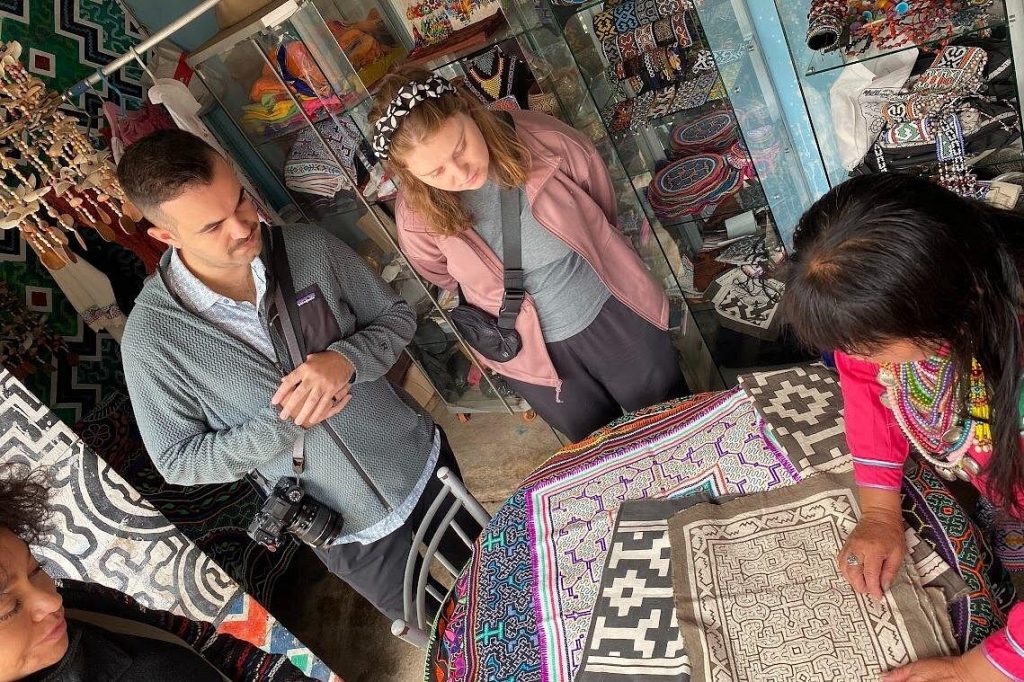
I’ve been wanting to do the Private Shipibo Craft Village Experience, where Shipibo artisans share the meaning behind their designs before teaching you to paint your own piece using natural dyes made from tree bark.
Consistently reviewed as one of Lima’s most meaningful cultural experiences, it’s a rare opportunity to experience a living Indigenous textile tradition without leaving the city!
Book eary…it’s a popular excursion!
Peru’s Other Fiber Language: The Quipu
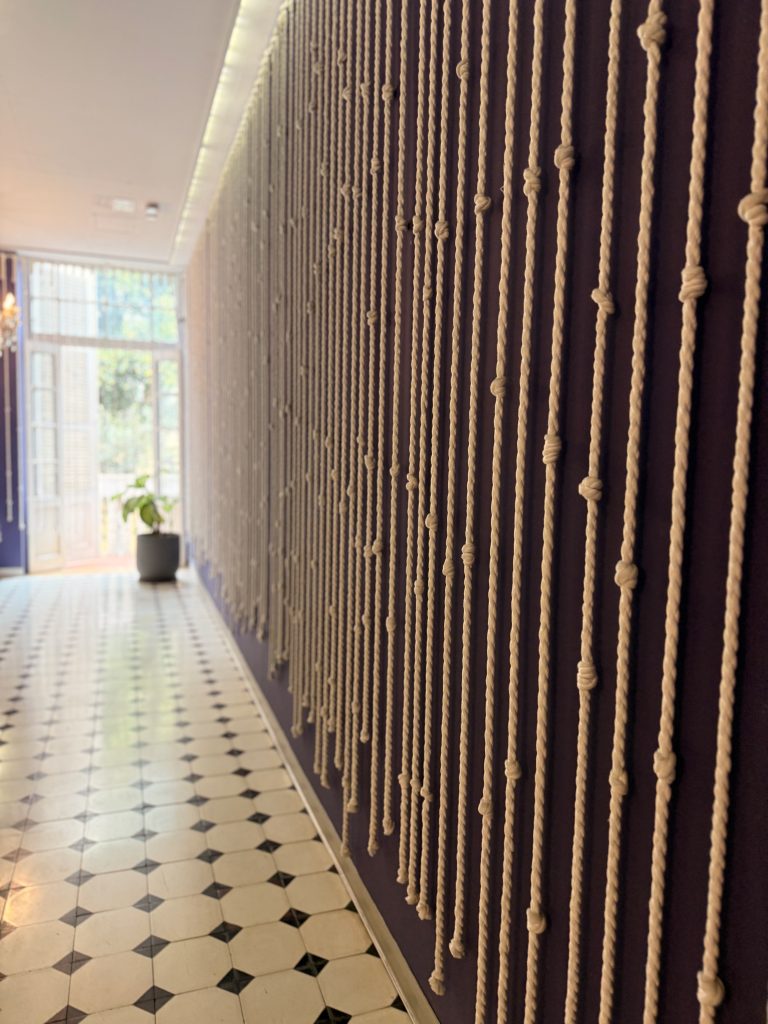
Textiles weren’t the only way Andean cultures recorded belief, identity, and memory. There was also the quipu (or khipu) — a system of knotted cords, no loom involved. Knot type, color, placement, spacing, and even the twist of a cord all carried meaning.
Quipu recorded census counts, taxes, labor obligations, and calendars, using a decimal system precise enough to help run the Inca Empire. Many researchers now believe some quipu also preserved names, histories, and stories, though scholars are still working out exactly how they were read.
The tradition predates the Inca by centuries, with early examples linked to the Caral-Supe civilization. The Wari later refined systems the Inca eventually adopted.
Specialists called khipu kamayuq trained for years to create and read them, passing the skill down through families. Museo Larco displays several quipu right alongside its textiles. Ask your guide to point them out — seeing both together is a good reminder that fiber in ancient Peru wasn’t just for clothing. It was for keeping records too.
And fun fact, the legendary Lima restaurant Astrid & Gaston have incorporated Quipus into their design, in the bathroom of all place and it’s pretty fabulous.
Final Thoughts
When most people think about Peru, they think about the Inca. But one of the country’s greatest treasures is the diversity of cultures that have shaped it over thousands of years—from the woven symbols of the Andes to the flowing kené designs of the Shipibo-Konibo and even the knots of a quipu. Together, they tell the same larger story: throughout Peru, fiber became a way to preserve identity, knowledge, belief, and memory.
So the next time you’re wandering through a market in Cusco, browsing a weaving cooperative in the Sacred Valley, or visiting Museo Larco in Lima, take a closer look. Most visitors leave Peru remembering the colors and the craftsmanship. I hope you’ll remember the stories too—because once you understand the meaning behind the symbols, you’ll never see a Peruvian textile the same way again.
Frequently Asked Questions
Are brightly colored Peruvian textiles more authentic?
Not necessarily. Many brightly colored textiles use modern synthetic dyes. Traditionally dyed textiles often have softer, more muted colors, especially as they age.
Does a faded textile mean it’s authentic?
Not automatically. However, naturally dyed textiles often mellow over time, so softly faded colors can sometimes be a sign of traditional materials and older craftsmanship.
Is kené the same as Andean textile symbolism?
No. Kené belongs to the Shipibo-Konibo people of the Peruvian Amazon and represents a completely different artistic and spiritual tradition.
How can I tell if a Peruvian textile is handwoven?
The clearest signs are natural fiber that feels heavy and warm rather than synthetic, tight, consistent weaving with no pilling, and colors that vary slightly rather than looking perfectly uniform.
Where can I buy authentic Peruvian textiles?
The best places are weaving cooperatives in the Sacred Valley, artisan communities, and organizations like the Center for Traditional Textiles of Cusco (CTTC), where purchases directly support traditional weavers.
Stay Connected
Get insider tips, local favorites, and hidden gems delivered straight to your inbox. Join our community and explore Lima beyond the beaten path.