
Peruvian Textiles: Ultimate History and 2025 Shopping Guide

This post may contain affiliate links. If you click one and make a purchase, I may earn a small commission at no extra cost to you. I only recommend products I genuinely use or believe will add value to you.
Planning a trip to Peru? Here’s your guide to navigating the world of Peruvian textiles—from baby alpaca to bold frazadas to the softest cotton you’ve ever touched.
When I first started coming to Peru, I knew it was famous for textiles—but I didn’t really get it. I thought, “Sure, they make nice sweaters,” and moved on. What a miss. Once I finally paid attention, it felt like I’d unlocked a secret level of shopping: buttery-soft alpaca scarves, cozy frazadas bursting with color, Pima cotton so smooth it makes your favorite tee feel like sandpaper.
Whether you’re wandering through the markets in Miraflores or stepping into one of Lima’s gorgeous boutiques, knowing a little about Peru’s textile scene will totally change how you shop. This guide breaks it all down—what’s worth buying, how to tell the real stuff from the knockoffs, and where to find the good stuff without getting overwhelmed.
Pima Cotton: Peru’s White Gold
You’ve probably seen “Pima cotton” on a tag before and thought, “Oh, fancy.” But true Peruvian Pima cotton is next-level—soft, strong, smooth, and grown right here in northern Peru.
Here’s what makes it special:
- Extra-long staple = ridiculously soft and doesn’t pill
- Hand-harvested to protect the fibers
- Takes dye beautifully and lasts forever
- Actually gets softer with every wash
- Naturally breathable and lightweight
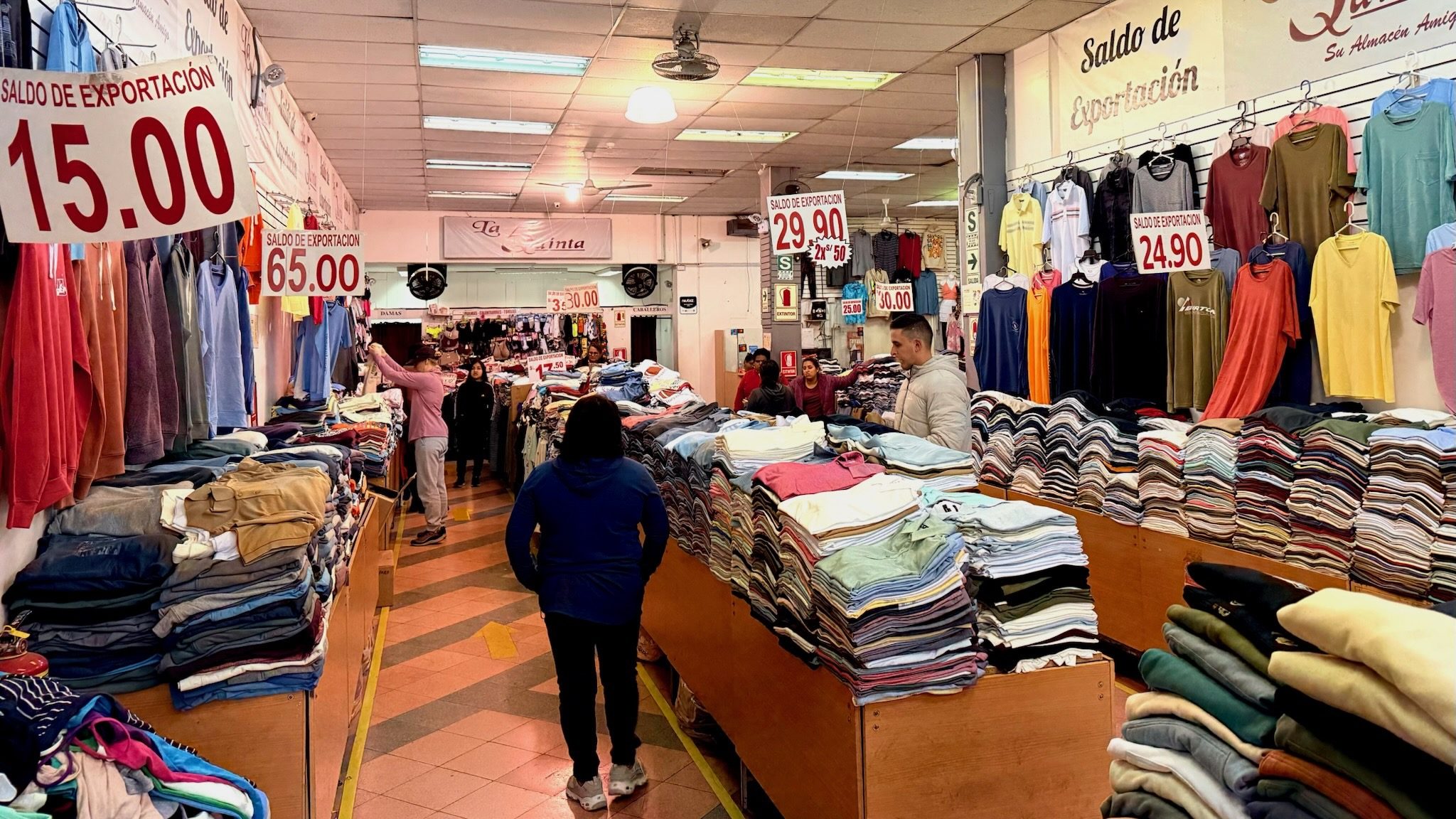
One of my favorite places in Lima for Pima cotton is La Quinta, right in the heart of Miraflores. It’s a great spot for baby clothes, pajamas, and those T-shirts you’ll end up wearing on repeat. If you’re into basics that feel elevated, go. You can thank me later.
Frazadas: The Bold, Beautiful Blanket of the Andes
Let’s talk about one of the most eye-catching and character-filled textiles in Peru: the frazada. These thick, handwoven wool blankets are made in the Andean highlands and are known for their vibrant color combinations and geometric patterns. Traditionally used to keep warm in high-altitude homes, they’ve become a favorite among travelers and designers alike for their bold, rustic style.
Most are made from sheep’s wool—sometimes blended with synthetic fibers—and while they’re not buttery-soft like baby alpaca, they’re durable and full of personality.

I love them so much that the hero image on my website is literally a pile of brightly colored frazadas from the Inka Market in Miraflores. The hot pinks, deep oranges, saturated greens and blues—I can’t get enough of them. Are they the most historically “authentic”? Maybe not. But they’re joyful and striking, and I’m obsessed.
If you’re shopping in Lima, here’s where to look:
- Dedalo (Barranco) – Curated, high-quality, and artfully displayed
- Las Pallas (Barranco) – Traditional, artisan-made, and often one-of-a-kind
- Inka Market (Miraflores) – You’ll need to dig, but there are some real gems such as the offerings from one of my favorite vendors Maribel at Mi Colores. (Av. Petit Thouars N° 5330 Int. 2 Miraflores, +51 943 305 492 / mariluz82_@hotmail.com)
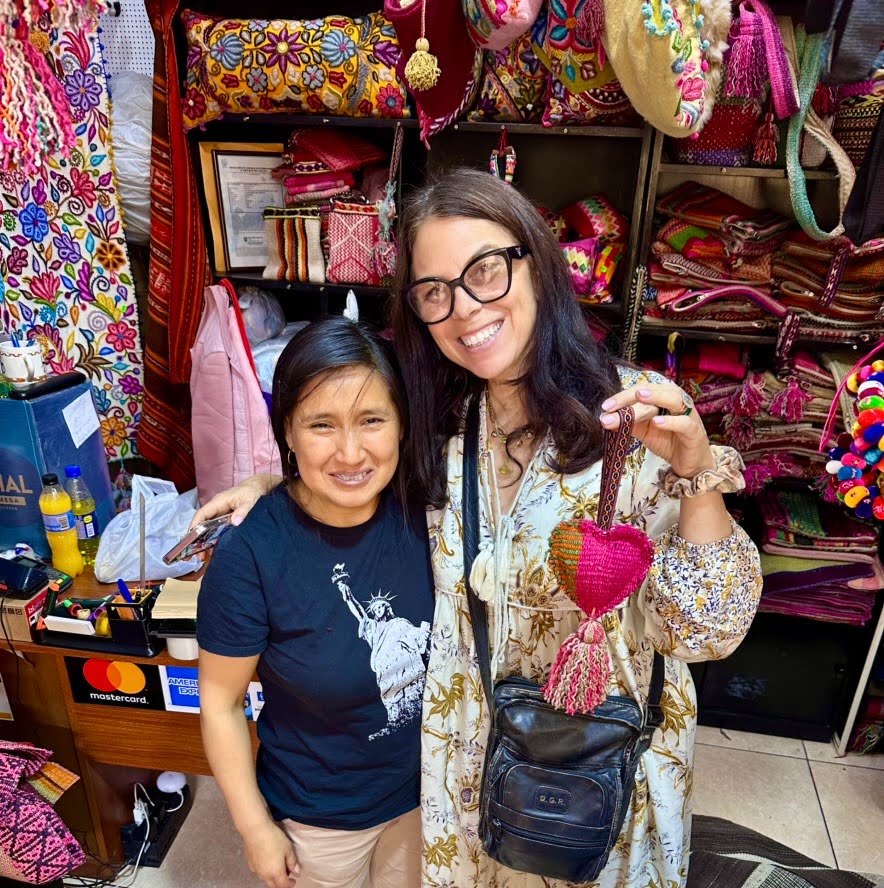
Just be warned: Frazadas and the bags and pillows made from them are heavy. If you’re buying more than one piece, consider shipping or expect to pay for extra baggage! (I’ve learned this the hard way).
Now Let’s Get Into Alpaca—but First, a Little Zoological Lesson
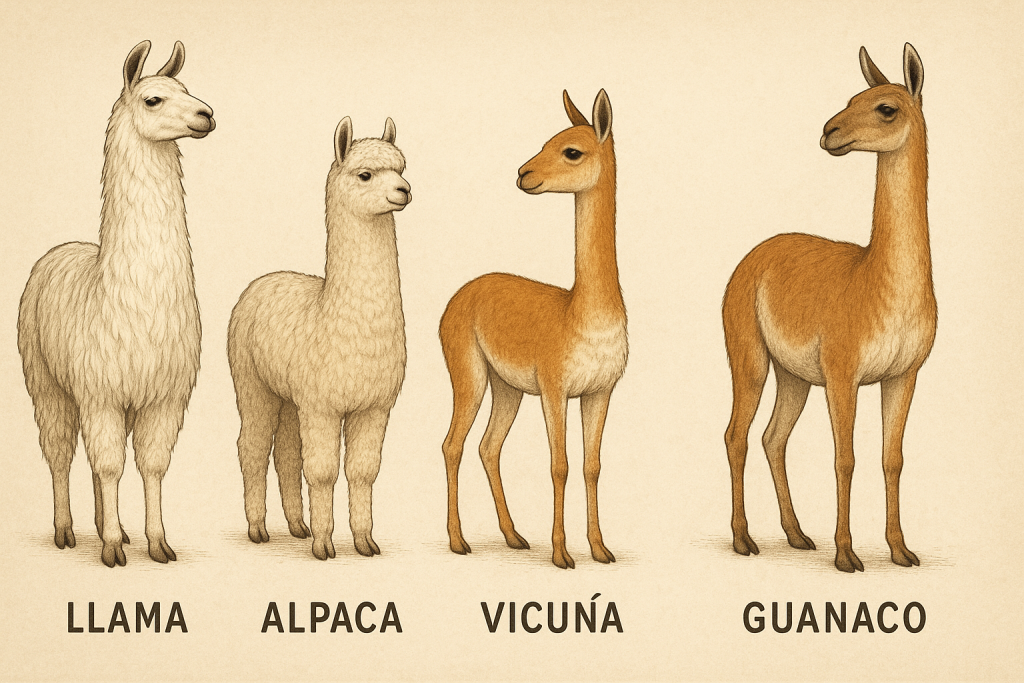
You’ve heard of alpaca. Maybe even worn it. But Peru is home to four camelid species, and knowing the difference matters—especially when someone’s trying to sell you a “llama wool” scarf for $150.
Here’s the rundown:
Llamas
- Big, long-faced, banana-eared
- Used as pack animals
- Wool is coarse—not great for clothes, but fine for rugs
- You’ll see them posing for tourist photos in the Andes
Alpacas
- Smaller, bred for their fiber
- Shorter ears, rounder faces
- Wool is softer, warmer, and far more wearable
- Long-lasting fabric with proper care
- The textile superstar of the group
Vicuñas
- Wild and protected (you can’t own one)
- Cinnamon-colored and very dainty
- Produce the softest and most expensive natural fiber in the world
- Shorn only every three years, under strict regulations
Guanacos
- Wild relatives of llamas
- Soft-ish fiber, but not used much in textiles
- Found in southern Peru and neighboring countries
Bottom line: Most wearable pieces you’ll find are made from alpaca. If someone’s trying to sell you a fancy “llama” sweater, smile politely and walk away.
Alpaca Fiber: The Softest Investment You’ll Ever Make
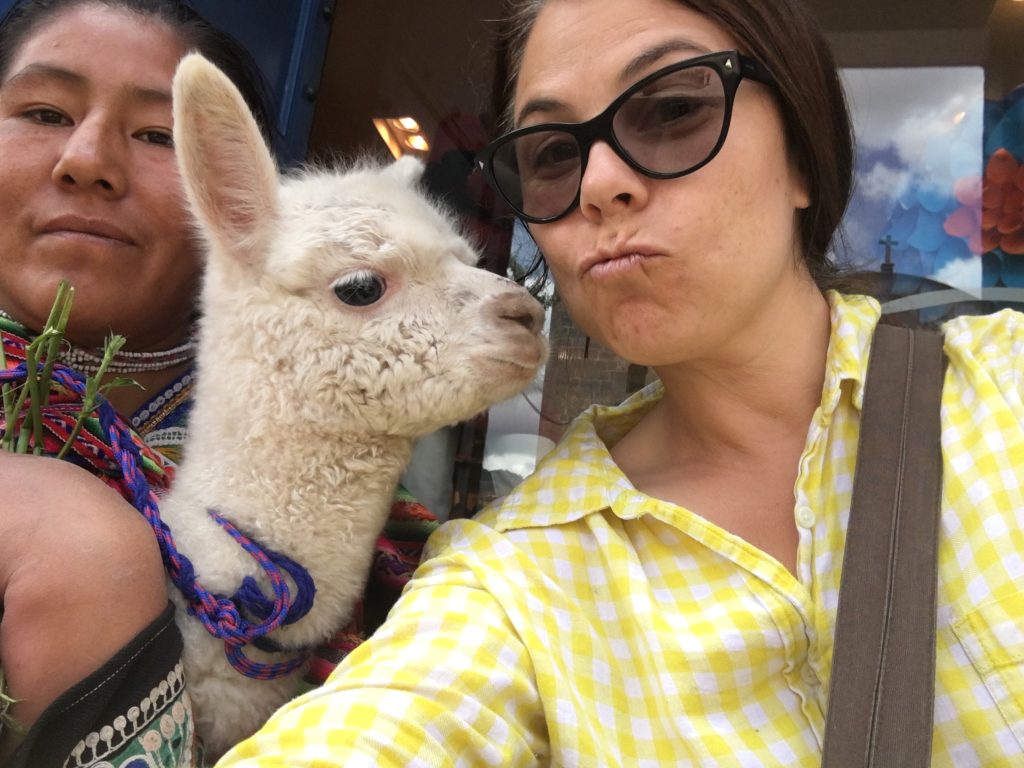
Alpaca is Peru’s most famous textile export, and for good reason. With 80% of the world’s alpaca population living here, it’s been a staple of Andean life for centuries. It’s soft, durable, warm, and just luxe enough to feel like a splurge without totally wrecking your travel budget.
Types of Alpaca Fiber:
- Regular Alpaca (26–30 microns): A little coarser, used in coats and outerwear
- Superfine Alpaca (22.5–26 microns): Great for sweaters and scarves
- Baby Alpaca (19–21 microns): Not from babies—just the softest fleece on adult alpacas
- Royal Alpaca (under 19 microns): Super rare and ultra soft—like cashmere, but cooler
Why You’ll Love It:
- Hypoallergenic (no itch, no sneezing)
- Warm without bulk
- Regulates temperature, so you don’t overheat
- Stain-resistant and doesn’t pill easily
- Naturally comes in a huge range of colors
Vicuña: The Gold Standard of Luxury
Vicuña is the crown jewel of Peruvian textiles—once reserved for Inca royalty, and still priced like it. It’s softer than cashmere, lighter than air, and more expensive than a round-trip flight back to Lima.
Here’s the deal:
- Fibers are just 11–14 microns thick
- Vicuñas are wild and only shorn every 3 years
- Each animal produces just 300 grams of fiber
- Natural caramel color, usually left undyed
- Coats and scarves can cost $3,000–$15,000
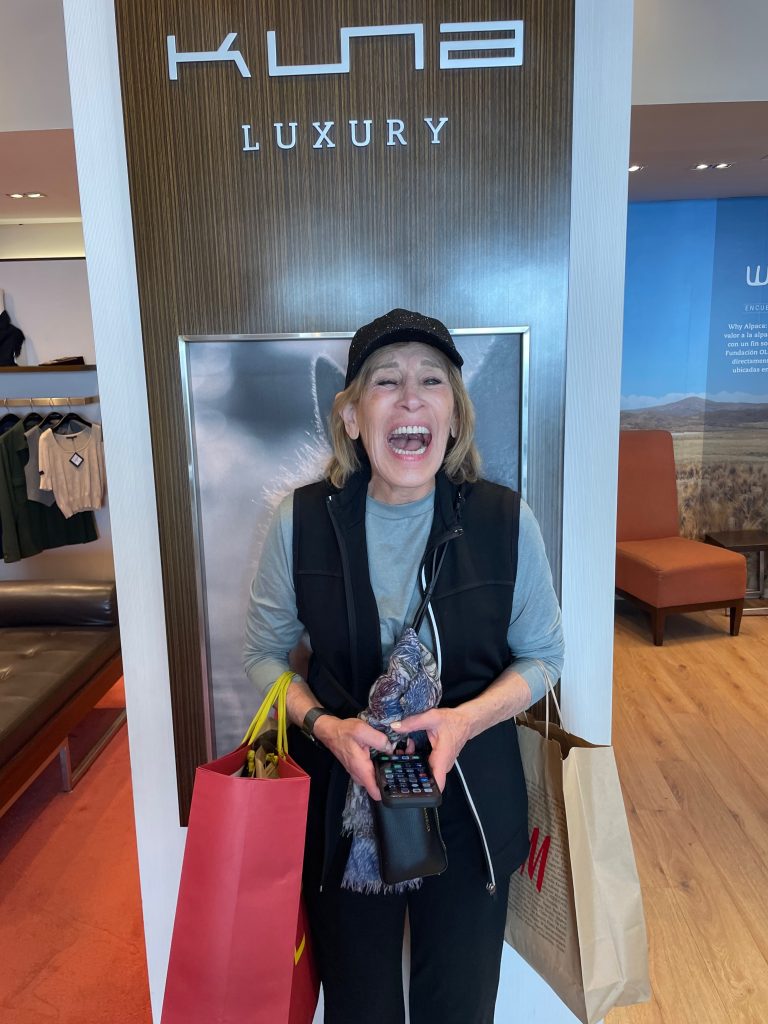
At Kuna, one of Lima’s luxury boutiques, there’s a tiny section of vicuña you can usually spot in the back.
On a recent trip to Lima, my aunt tried on and fell in love with a sleek black overcoat that she found in the Vicuña section of Kuna at Larcomar. After a quick calculation amongst myself, my cousins, and my aunt, we figured the coat was $1,100. A lot of money but worth it and more affordable than similar coat would be at home.
Well, our bad. It was $11,000 and, unfortunately, we didn’t figure it out until we looked at the receipt! Luckily the store was lovely about it and reversed the charge. Pro tip: be sure to learn the ins and outs of spending money in Lima!
Not all was lost. She may not have gotten the Vicuña coat, but she did end up with a gorgeous baby alpaca coat—and an even better story.
How to Shop Smart for Textiles in Lima
Shopping for textiles in Lima can be magical—or confusing. There’s a lot out there. Some real, some not-so-real, and some that look fabulous but fall apart after one wash. Knowing what to look for is key.
How to Spot Real Alpaca
- Touch it: Real alpaca feels silky and cool to the touch—not plastic-y or fuzzy like acrylic.
- Check the weight: Alpaca has a nice, natural heft. Fakes tend to be too light.
- Look at the price: If it’s under 80 soles and labeled “baby alpaca,” it’s probably not.
- Do a pill test: Acrylic pills easily. Alpaca holds up.
- Burn test (only if you’re feeling bold): Snip a thread—real alpaca smells like burning hair, not plastic.
Shopping for Vicuña
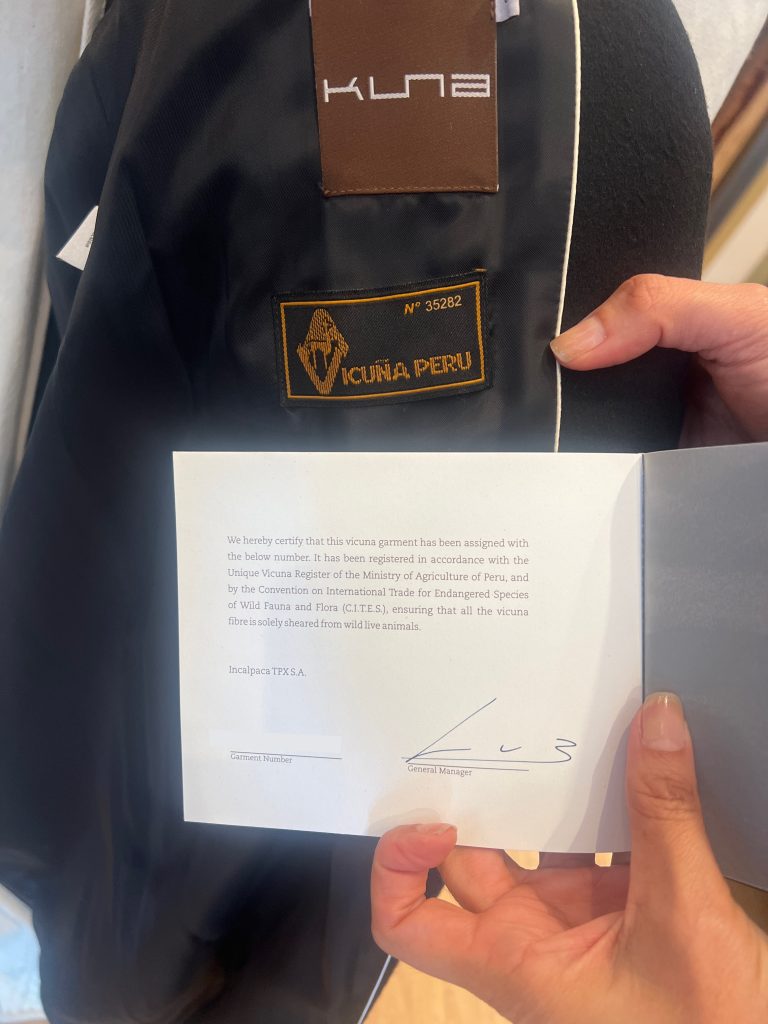
- Only buy from reputable alpaca brands like Kuna
- Real vicuña items come with CITES certification
- If it’s not expensive, it’s not real—there’s just no way around it
Where to Shop
High-End Stores:
- Kuna – The go-to for vicuña and top-grade alpaca (Larcomar, San Isidro)
- Alpaca 111 – Trendy, great quality, modern cuts
- Sol Alpaca – Stylish classics with beautiful detailing
Artisan-Focused:
- Dedalo (Barranco) – Boutique meets gallery
- Las Pallas (Barranco) – Folk art, woven pieces, and expert curation
Markets:
- Mercado Indio (Miraflores) – Huge selection; you’ll need to sift
- Barranco Sunday Market – Smaller, but curated and fun
FAQs About Peruvian Textiles
What’s the difference between alpaca and baby alpaca?
Baby alpaca comes from the softest fleece on adult alpacas—not from baby animals. It’s finer, smoother, and usually more expensive.
Is llama wool the same as alpaca?
Nope. Llama wool is coarse and rough. Alpaca is much softer and better for clothing.
Where can I buy real vicuña in Lima?
Your best bet is Kuna. Always ask for certification, and be prepared for a serious price tag.
How can I tell if something is real alpaca?
Feel it, weigh it, and check the price. Real alpaca doesn’t feel plasticky, and it definitely doesn’t cost 40 soles.
Are blends okay?
Yes! Alpaca-silk and cotton-alpaca blends are often gorgeous and more affordable.
Final Tips for Textile Shopping in Peru
- Touch everything. You’ll learn quickly what feels real.
- Don’t be afraid of blends—some are stunning.
- Ask questions—especially in boutiques. Staff usually know their stuff.
- Go early to markets. It’s calmer, and you’ll get more attention.
- Leave space in your suitcase. Or better yet, ship it home.
- Support the makers. Look for brands that work directly with local weavers.
Textiles in Peru aren’t just souvenirs—they’re a piece of the culture. Whether you’re picking up a brightly colored frazada or an ultra-soft alpaca scarf, you’re carrying a story with you. And if you do it right, that story gets even better every time you wear it.
Have a favorite shop or textile find in Peru? Tell me in the comments or tag me on Instagram—I want to see it!
Stay Connected
Get insider tips, local favorites, and hidden gems delivered straight to your inbox. Join our community and explore Lima beyond the beaten path.