
Sustainable Fashion in Lima Peru: 13 Eco-Friendly Brands to Shop

This post may contain affiliate links. If you click one and make a purchase, I may earn a small commission at no extra cost to you. I only recommend products I genuinely use or believe will add value to you.
I don’t know about you, but I like knowing where my clothes come from, how they’re made, and who I’m supporting with my purchases. Sustainability isn’t just a buzzword anymore—it’s something that actually matters. And I have to say, Lima is one of the best cities I’ve ever explored for eco-conscious fashion that’s also drop-dead gorgeous.
Peru has a deep, rich textile tradition. We’re talking thousands of years of weaving, natural dyeing, and fiber artistry, passed down through generations. What’s exciting is that today’s designers aren’t just preserving that legacy—they’re elevating it. Think: modern silhouettes, ethical practices, and fabrics that feel as good on your conscience as on your skin.
Ready to explore sustainable fashion in Lima Peru? Here are the spots I personally love—and trust me, they’re worth carving out space in your suitcase.
13 Eco-Conscious Stores in Lima
Read on to learn more about these top local eco-friendly stores in Lima.
Gechari (San Isidro)

Gechari has been leading the slow fashion movement in Peru since 2008, long before most people knew what “eco-friendly” fashion even meant. Their curated selection blends local and international brands with strict ethical standards—think fair trade, animal-friendly, and low-impact materials.
This isn’t just a boutique—it’s a full-on lifestyle store. You’ll find everything from soft everyday basics to stunning accessories, skincare, and even home goods. But what really sets them apart is their deep commitment to education and evolution. Every piece they carry is part of a bigger mission: to make sustainability feel personal, not preachy.
Where to Find Gechari
Address: Av. Emilio Cavenecia 278, San Isidro
More info: www.gecharistore.com
Las Pallas (Barranco)
Las Pallas is a Barranco classic—and honestly, it feels more like a curated museum than a shop. It’s tucked inside a restored colonial house and run by Mari Solari, who has spent decades working directly with artisans all over Peru. Her relationships with these communities aren’t transactional—they’re deeply respectful partnerships.
The shop is filled with one-of-a-kind finds: handwoven textiles, naturally dyed alpaca shawls, and home décor that blends Indigenous artistry with timeless style. It’s the kind of place where you don’t just buy something—you learn the story behind it.
Where to Find Las Pallas
Address: Cajamarca 212, Barranco
More Info: https://www.instagram.com/artesanias.laspallas/?hl=en
Ayni (Miraflores)
This brand is the definition of “quiet luxury”—and I mean that in the best way. Ayni, which means “reciprocity” in Quechua, was founded by a Danish-Peruvian duo with a shared love of slow fashion and ethical production. Their aesthetic blends Scandinavian minimalism with rich Peruvian textures for a look that’s effortlessly chic and rooted in sustainability.
You’ll find ultra-soft baby alpaca sweaters, organic Pima cotton separates, and elevated basics you’ll actually want to live in. Bonus: they’re meticulous about ethical labor practices and transparency across the supply chain, which makes their beautiful clothes feel even better.
Where to Find Ayni
Address: Av. Santa Cruz 940, Miraflores
More Info: https://ayni.com.pe/
Escvdo (Miraflores)
Escvdo isn’t just a fashion label—it’s a cultural conversation. Designer Chiara Macchiavello collaborates directly with Indigenous artisans, particularly from the Shipibo-Conibo community in the Amazon, to create clothing that’s both meaningful and modern and deserving of it’s position as a globally recognized sustainable brand.

Available in the states through high-end retailers like Moda Operandi, Revolve, and Net-a-Porter, Esvdo’s designs are rich with symbolism—intricate embroidery, handwoven details, and traditional techniques reimagined into sharp, contemporary silhouettes. Each piece feels like wearable heritage. If you’re drawn to fashion with depth and soul, Escvdo is a must.
Where to Find Escvdo
Address: Miguel Dasso 139, Miraflores
More Info: https://www.escvdo.com/
Canastas NamasT (Online)

This online boutique is such a hidden gem. Canastas NamasT works hand-in-hand with rural artisan communities to produce handcrafted accessories and homewares that are as ethical as they are beautiful. Think woven straw bags, naturally dyed textiles, and fair-trade practices every step of the way.
What I love most is how each piece feels totally connected to place and process. There’s no greenwashing here—just thoughtful design rooted in tradition and sustainability.
Where: Online only
Shop: canastasnamast.com
Dédalo Arte & Artesanía (Barranco)
Dédalo is a dream for anyone who loves design, art, and discovery. Located in a grand old mansion with leafy courtyards and a café in the back, this space is part store, part gallery, and fully enchanting.
The fashion and textile selection focuses on natural fibers and sustainable techniques, but you’ll also find ceramics, jewelry, and sculpture from some of Peru’s most talented contemporary artisans. It’s the kind of place you could spend an entire afternoon browsing—and trust me, I have.
Where to Find Dédalo
Address: Paseo Sáenz Peña 295, Barranco
More Info: https://www.dedalo.pe/en
Alesandra Peterson (Miraflores)
Alesandra’s designs are a beautiful love letter to Peru. She works closely with Andean artisans to create clothing that feels modern while honoring traditional handcraft. Her pieces are made with organic materials, plant-based dyes, and zero-waste cutting techniques—everything a conscious fashion lover could ask for.
What I especially admire is her attention to detail. From the construction to the finishings, these garments are made to last. They’re not trend-driven—they’re timeless, in the best sense of the word.
Where to Find Alesandra Peterson
Address: Miraflores (check IG for exact location)
More Info: https://www.alessandrapetersen.com/
Fringe Mod (Miraflores)
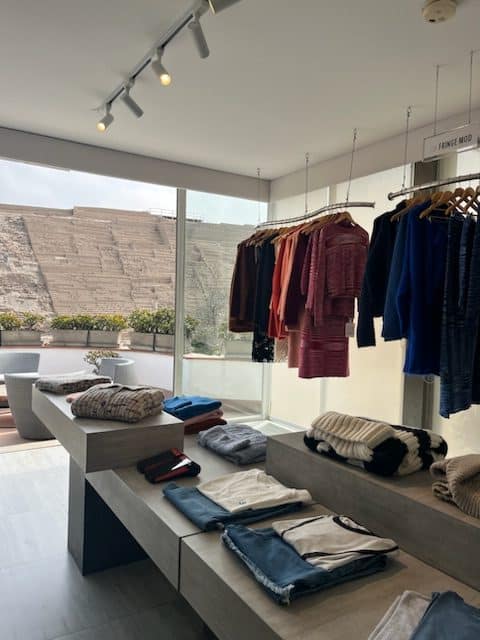
This isn’t your average eco-fashion boutique. Fringe Mod is bold, artsy, and not afraid to push the envelope. Their rooftop showroom feels more like a design lab than a store—and that’s exactly the point.
The collections here are edgy and experimental, made with upcycled fabrics and natural fibers, and rooted in traditional Peruvian techniques. They also host regular workshops on sustainable design and conscious consumerism. It’s fashion with attitude and intention.
Where to Find Fringe Mod
Address: General Borgoño 770, 3rd floor, Miraflores
More Info: https://fringe-mod.com/
Kuna (Multiple locations)
Kuna has been Peru’s luxury alpaca authority since 1953, but their home textile collection is where they truly shine. Think criminally soft baby alpaca throws, naturally dyed rugs with traditional Andean patterns, and cushions that feel both ancient and completely contemporary.
What sets them apart is the story behind each piece—they work directly with over 600 families in rural communities, ensuring fair wages and using only natural fibers and dyes. It’s luxury with a conscience, and the quality is heirloom-level.
Where to Find Kuna
Where: Multiple locations including Miraflores, San Isidro, and Jorge Chávez Airport
More Info: Kuna
Camaq – Goicochea Family Basketry

The Goicochea family has been mastering junco reed basketry for generations, using pre-colonial techniques that feel both timeless and totally modern. Working from their Lima workshop, they create stunning woven bags and homewares from reeds harvested in Peru’s coastal wetlands.
Their circular-shaped bags are the perfect blend of form and function—sturdy enough for daily use but gorgeous enough to be conversation pieces. Plus, junco is completely renewable and the traditional harvesting actually supports coastal ecosystems.
Where to Find Camaq
Address: Lima Storefont in Indian Market
More Info: Facebook
Barranco Flea Market (La Feria de Barranco)

Vintage lovers, this one’s for you. Every weekend, the Barranco Flea Market brings together independent designers, collectors, and artisans offering everything from upcycled denim jackets to handmade accessories using repurposed Peruvian textiles.
It’s fun, it’s affordable, and it’s packed with personality. The vibe is very local, very creative, and very “you never know what you’ll find”—which is exactly why I go back again and again.
Plus there are insane food options!
Where to Find Barranco Flea Market
Address: Jiron Unión 108 – Barranco, Lima, Peru Lima 04
When: Wednesday-Sunday
More Info Here
Museo Amano (Miraflores)
Before you dive into shopping, take a detour to Museo Amano. This small museum holds one of the world’s best collections of pre-Columbian textiles, with displays of intricate weaving and dyeing techniques that are still inspiring designers today.
If you want to understand the roots of Peruvian fashion—and why it’s such fertile ground for sustainable design—this is the place.
Where to Find Museo Amano
Address: Calle Retiro 160, Miraflores
Look for Street Vendor

One of my most favorite memories was purchasing handmade placemats from a street vendor. She had made everything she sold by hand and it was spectacular. I have gone back a few times to find her in the same spot (by the Starbucks by Dasso in San Isidro) but she hasn’t been there. I’ll keep checking!
Quick Tips for the Conscious Shopper in Lima
- Authenticity check: Handmade pieces often have small imperfections. It’s a sign of the maker’s hand, not a flaw.
- Baby alpaca = first shearing, not baby animals. Totally ethical, and incredibly soft.
- No haggling in boutiques. But in markets, polite negotiation is expected—and appreciated.
- Look for certifications. “Hecho a Mano” (Handmade) and Fair Trade labels are good indicators.
- Shipping: Many shops offer international shipping, often carbon-neutral. Just ask.
Final Thoughts: Sustainable Fashion in Lima Peru
Lima’s sustainable fashion scene is rooted in heritage, not hype. It’s thoughtful, authentic, and incredibly inspiring. Whether you’re picking up a naturally dyed poncho or learning about pre-Columbian weaving, shopping in Lima can be more than retail therapy—it can be a way to connect more deeply with the culture, the land, and the makers who bring it all to life.
Have a favorite find or designer I missed? Tell me in the comments or tag me on Instagram—I’d love to see what sustainable treasures you uncover.
Stay Connected
Get insider tips, local favorites, and hidden gems delivered straight to your inbox. Join our community and explore Lima beyond the beaten path.